Most experimentation teams are good at measuring what users do. Heatmaps show where people click. Session recordings capture where they drop off. Analytics tells you which pages are performing and which aren't. But knowing what users do and understanding why they do it are two very different things.
A user abandons checkout. The data tells you where. But is it the delivery cost? The payment options? A trust signal that's missing? Without asking, you're making an educated guess at best. And educated guesses, however well-intentioned, are not hypotheses.
At Paved Digital, one of the first things we do in any CRO engagement is help teams make that shift: from "we think users are dropping off because of X" to "users told us, at this exact moment, that X is why they left." That shift changes the quality of everything that follows. We wrote about who should own that process and why it matters - and the answer has everything to do with how feedback gets turned into action.
VWO Pulse is a tool built around the same principle.
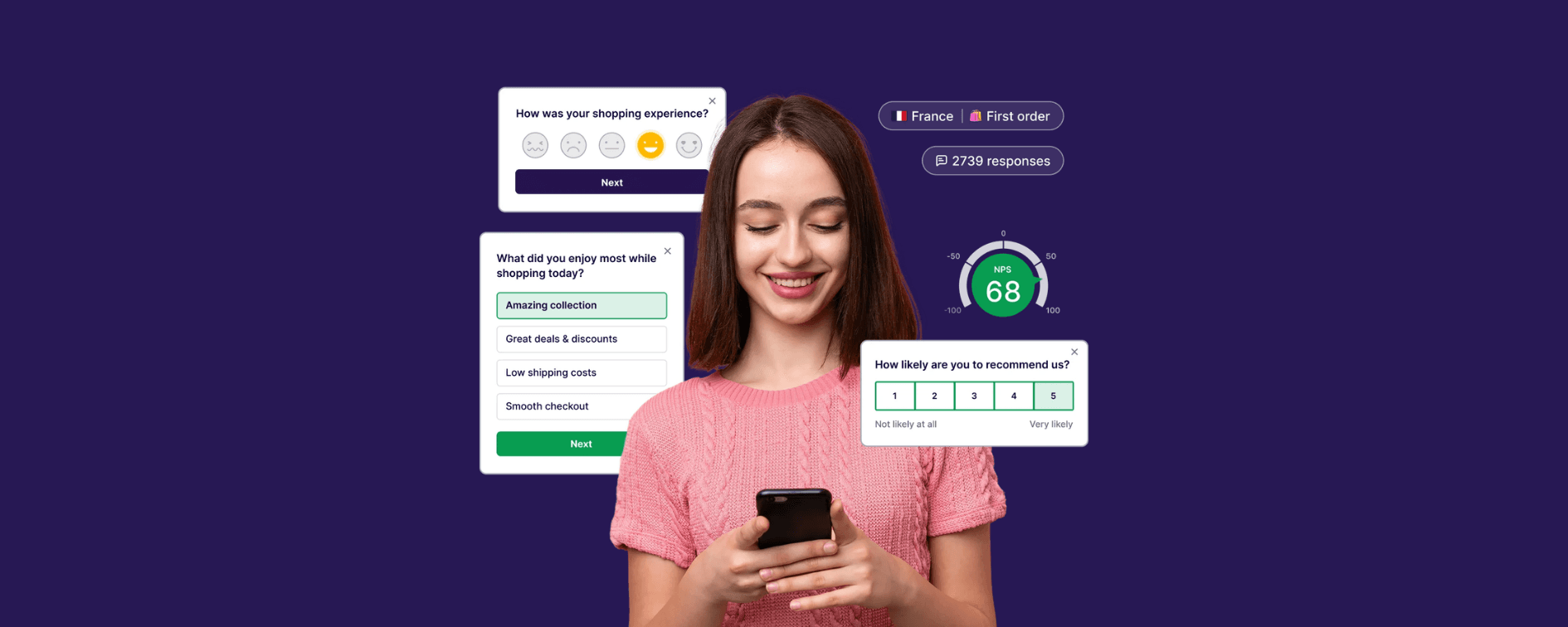
VWO Pulse is VWO's Voice of Customer product - a survey and feedback tool built to capture user input at the exact moment an experience happens, not hours or days later via email.
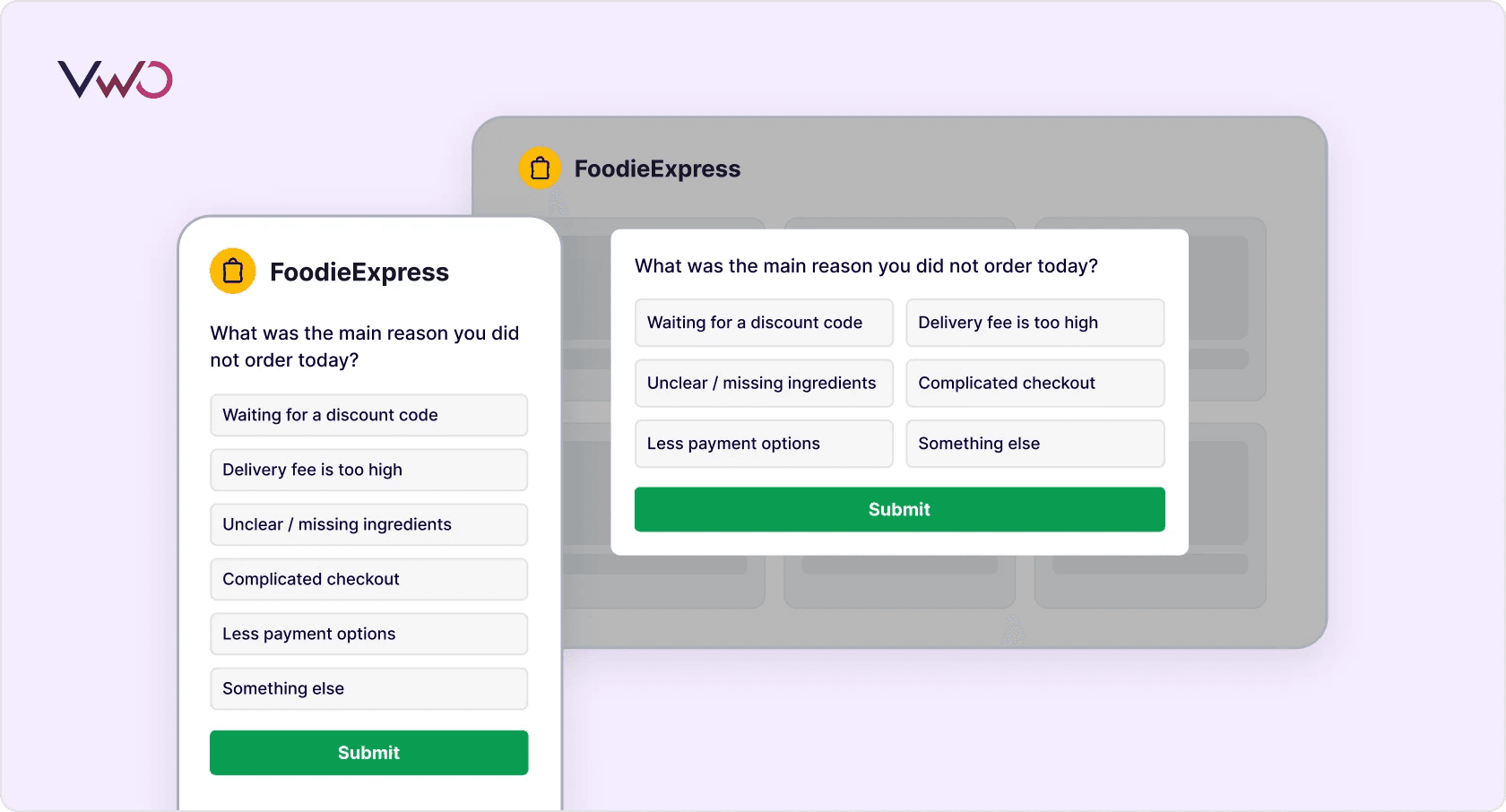
You can deploy surveys inside your web app, mobile app, or via shareable links, triggered by specific behaviours or moments you define:
A user who just abandoned a form
A new customer who completed their first purchase
Someone who visited a pricing page three times but didn't convert
What makes Pulse different from a standalone survey tool is where it lives. It's built natively into the VWO platform, which means the feedback you collect flows directly into the same environment where your experiments are designed, run, and analysed.
There's a reason in-the-moment feedback produces better insights than retrospective surveys. When you ask someone why they didn't complete a purchase while they're still on your site, their answer reflects what happened. When you email them two days later, you're asking them to reconstruct a moment they've already moved on from. The detail, the emotion, and the specificity are gone.
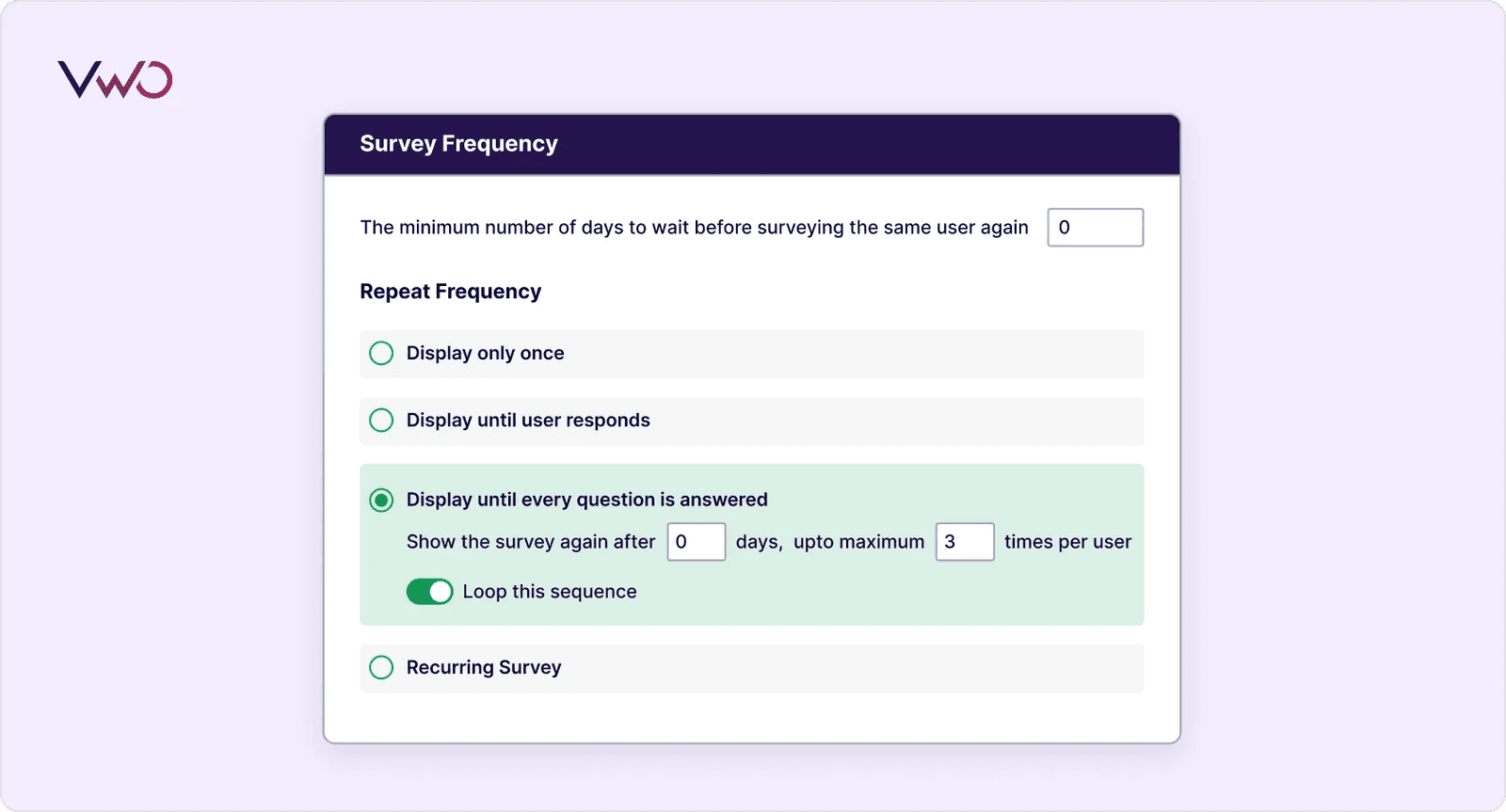
Pulse's fatigue controls mean you can run continuous feedback programs - NPS tracking, onboarding checks, feature adoption surveys - without over-surveying users. Frequency limits, "only once" rules, and cross-survey coordination keep the feedback loop open without becoming intrusive.
And when responses come in at scale, VWO's Copilot automatically categorises feedback by theme and sentiment, turning thousands of open-text responses into clear patterns in minutes rather than hours.
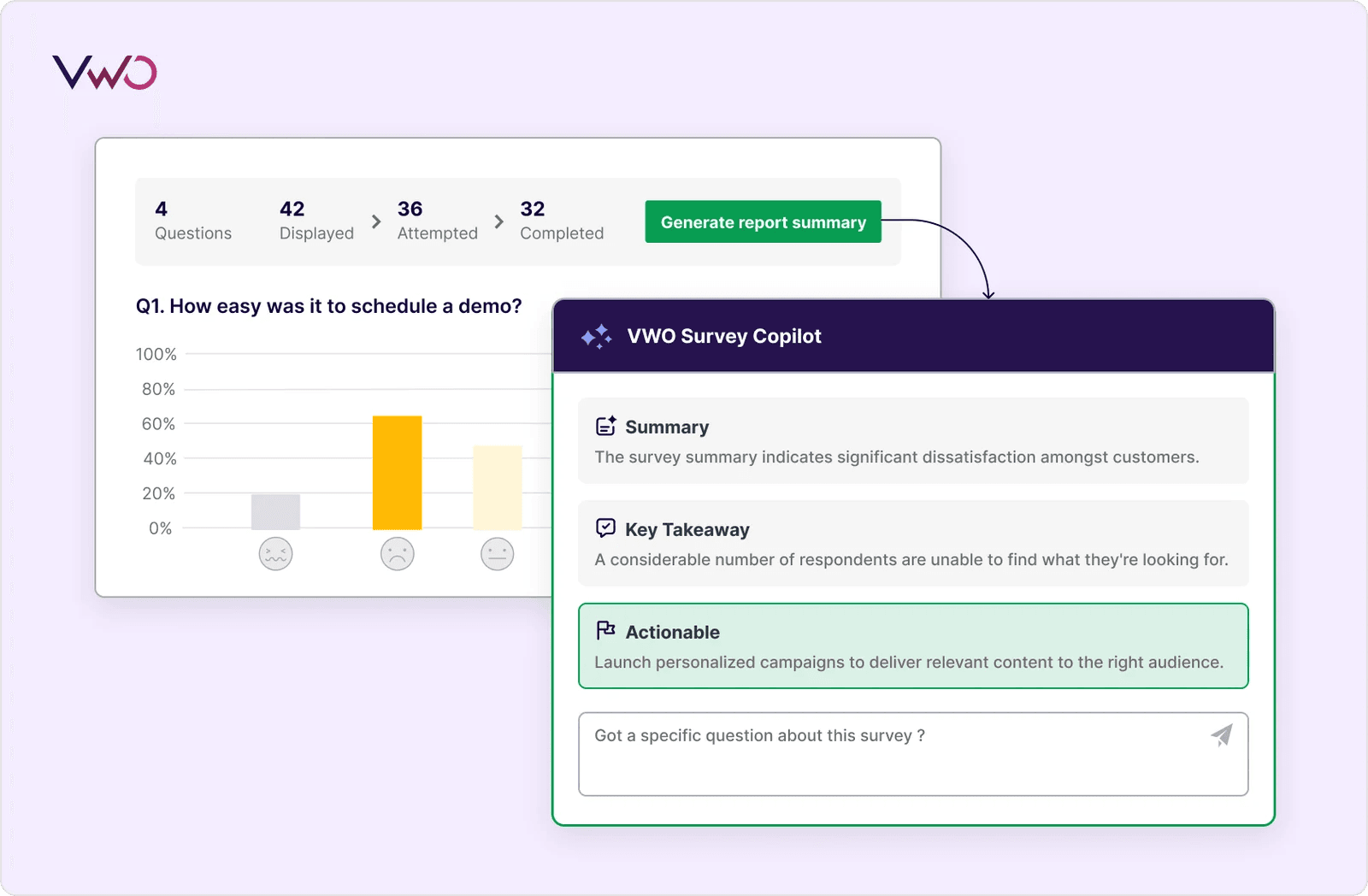
The tool handles the collection and analysis. But knowing which moments to survey, which questions to ask, and how to translate themes into testable hypotheses - that's where having an experienced CRO partner makes the difference between a feedback program and a learning engine.
The most compelling thing about VWO Pulse isn't any single feature. It's what becomes possible when feedback and experimentation live in the same platform.
VWO describes it as a six-step closed loop:
Observe - spot friction in the user experience using heatmaps, recordings, and analytics
Ask - trigger a Pulse survey at that exact moment to understand why
Hypothesize - use feedback themes to form data-grounded hypotheses rather than assumptions
Test - run the experiment in VWO based on what users actually told you
Validate - send a follow-up survey after the test to confirm the change landed as expected
Launch - roll out the winning variation with confidence
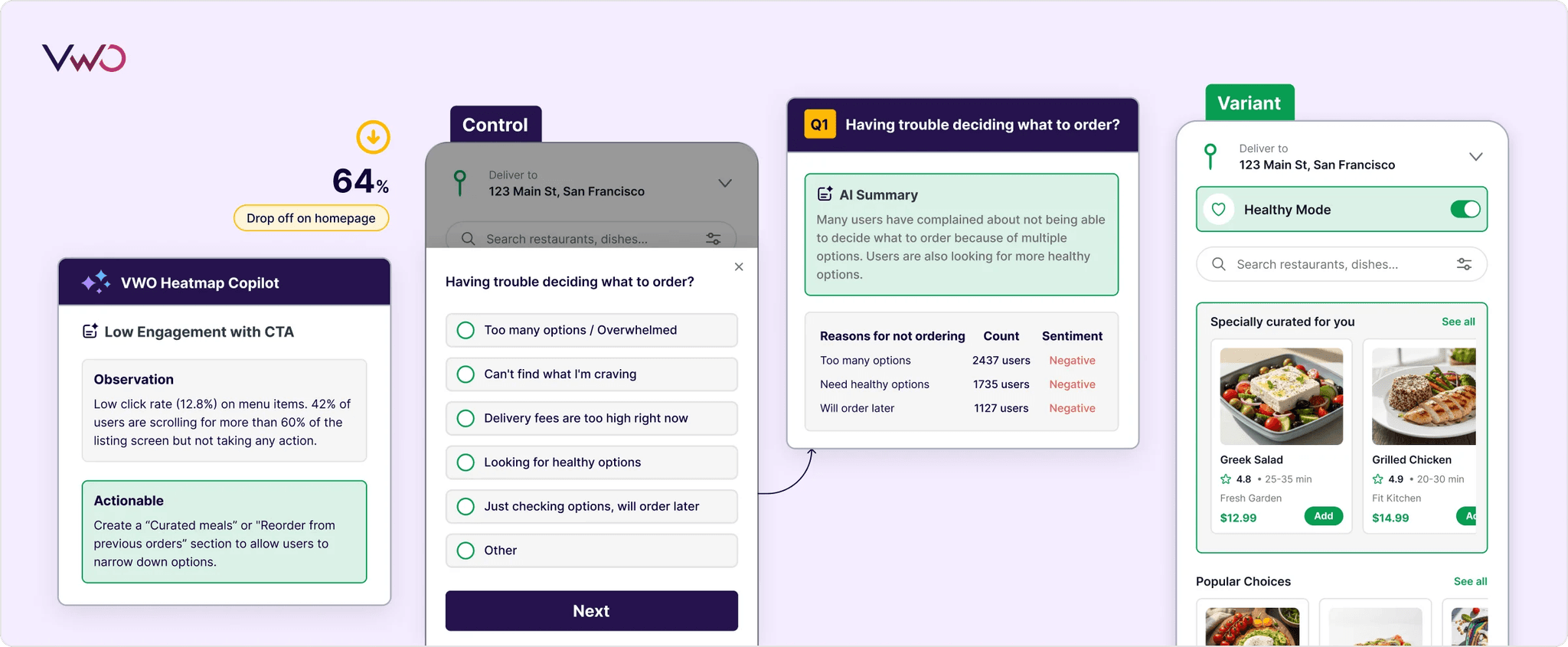
This workflow matters because it changes the quality of what gets tested. When hypotheses are grounded in real user language and not just behavioural signals, experiments are more likely to surface meaningful insights - whether they win, lose, or land somewhere in between.
At Paved Digital, this six-step loop mirrors how we structure our CRO programs. The audit and benchmark phase we run at the start of every engagement covers the Observe and Ask stages: understanding not just where users drop off, but why. From there, we work with clients to build a hypothesis backlog grounded in evidence, prioritise experiments using a structured framework, and run tests with the right tracking configuration to ensure results are trustworthy.
VWO Pulse doesn't replace that process. It extends it, giving teams a way to keep the feedback loop running continuously, and giving us richer source material to work with at every stage.
If your team is already running experiments, Pulse adds a qualitative layer that strengthens the entire program.
Instead of relying entirely on quantitative signals to generate ideas, you have a direct channel to the people using your product. That changes how your backlog gets built - away from opinions and toward evidence.
It also changes how you evaluate results. A post-test survey can tell you whether a winning variant felt better to users, or whether an inconclusive result is hiding a strong signal in a specific segment.
In our recent webinar with VWO on the experimentation gap, we talked about exactly this: the difference between teams that accumulate results and teams that accumulate knowledge. VWO Pulse is a meaningful step toward the latter.
But a tool on its own only goes as far as the program around it. The teams that get the most from Pulse are the ones with a clear hypothesis framework, a structured experiment roadmap, and a consistent process for turning every result into a learning - regardless of whether it wins.
If you're looking to build a more structured experimentation program around it - one that connects user feedback, hypothesis design, and experiment execution into a continuous workflow - that's exactly the kind of engagement we run at Paved Digital as a VWO partner. We help teams get more from VWO, not just set it up.
Get in touch to talk through how it fits into your CRO program.